
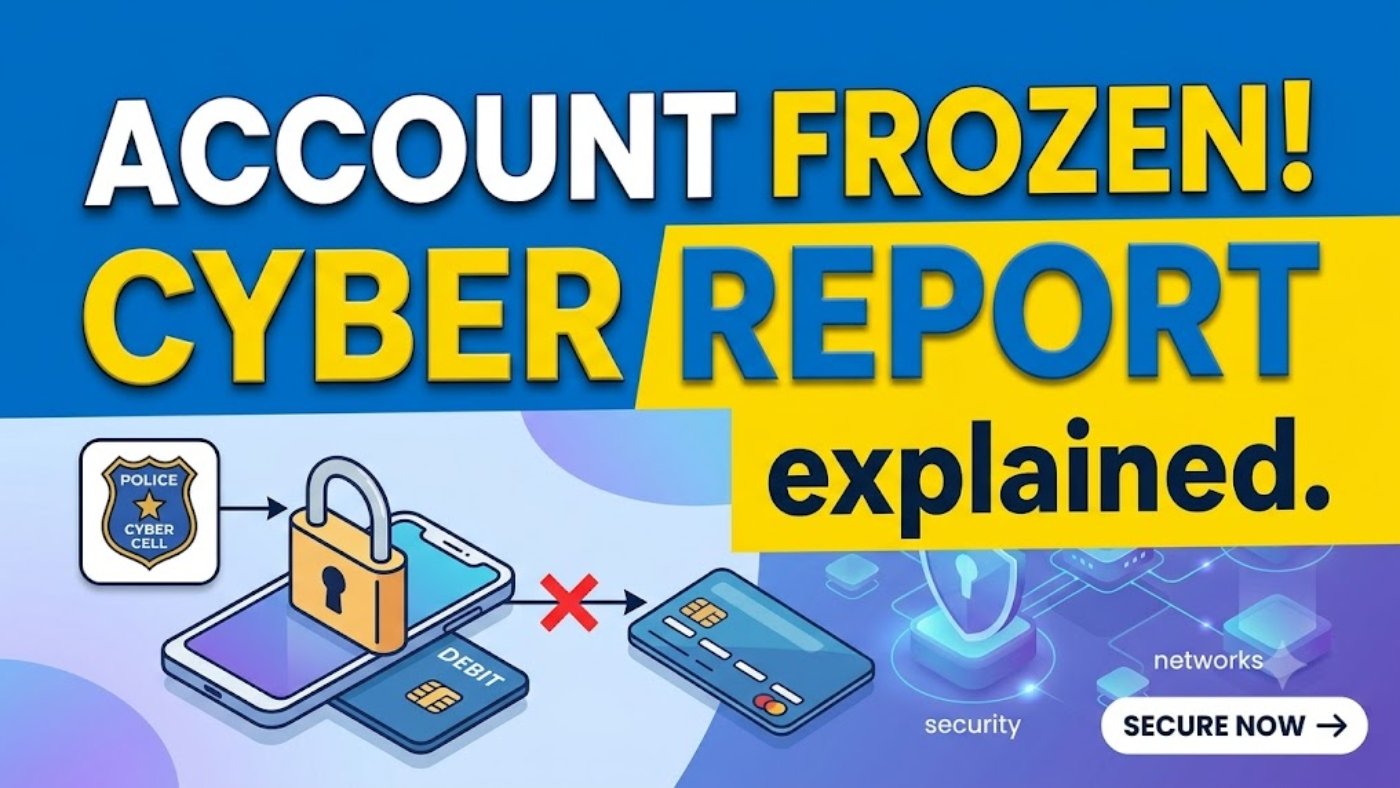
In today’s digital era, online banking and digital payments (like UPI, net banking, and digital wallets) have made our daily transactions fast and convenient. However, this convenience also opens doors for digital fraudsters and scammers. One common issue many account holders face today is finding their bank account frozen or flagged due to a Cyber Report.
If you are wondering why cyber reports are filed against bank accounts and how the reporting process works, this guide covers everything you need to know.
What is Cybercrime?
Cybercrime refers to any illegal activity carried out using a computer, smartphone, or the internet. In financial contexts, cybercrime usually involves online fraud, phishing, unauthorized fund transfers, identity theft, and fake investment scams.
Why is a Cyber Crime Report Filed Against a Bank Account?
When a victim falls prey to financial fraud, law enforcement agencies track the trail of stolen funds. A cyber report is typically linked to a bank account for the following reasons:
- Direct Fraud Transaction: Stolen money was transferred directly into your account by a scammer or through a deceptive transaction.
- Layering / Secondary Transfer: Fraudsters often transfer stolen money through multiple intermediate bank accounts (known as mule accounts) to hide the original source. If money from a fraudulent transaction passes through your account—even unintentionally—law enforcement automatically flags it.
- P2P Trading Scams: If you trade cryptocurrency on Peer-to-Peer (P2P) platforms, you might receive funds from an account that was involved in cyber fraud.
- Unauthorized Access / Hacked Account: Your account credentials were compromised and used by cybercriminals to route illicit funds.
When a victim files a complaint, police and cyber authorities issue a lien or debit freeze instruction to the bank to prevent the stolen funds from being withdrawn.
How to File a Cyber Crime Report
If you have been a victim of financial cyber fraud, reporting it immediately increases your chances of recovering lost funds.
- Call the Cyber Helpline Immediately
- National Helpline: In India, call 1930 immediately after noticing unauthorized transactions.
- Reporting within the “Golden Hour” (the first few hours after the fraud) gives authorities a much higher chance of freezing the money before scammers cash it out.
2.Report Online via the National Cyber Crime Portal
- Visit the official portal: cybercrime.gov.in.
- Click on “Report Other Cyber Crime” or “Report Financial Fraud”.
- Register using your mobile number and state.
- Fill in the incident details, including transaction IDs, bank details, dates, and screenshots/proof of fraud.
- Submit the complaint to receive a National Cyber Crime Reporting Portal (NCCRP) Acknowledgement Number.
3.Notify Your Bank Immediately
- Call your bank’s customer support or visit your home branch.
- Submit a written complaint along with the cyber crime acknowledgement number.
- Request the bank to block affected cards or net banking credentials if necessary.
What to Do If Your Own Account Is Frozen Due to a Cyber Report?
If your bank account was frozen because someone else filed a cyber report involving your account:
- Visit Your Home Branch: Ask the branch manager for the Acknowledgement Number (Ack No.), Cyber Cell station name, and state from where the freeze order originated.
- Gather Proofs: Collect all transaction receipts, bank statements, chat records, or invoices explaining the source of the payment.
- Contact the Cyber Crime Cell: Write an email or visit the police station handling the case. Provide proof that you are an innocent party with no fraudulent intent.
- Follow Up: Once the investigating officer verifies your claim, they will issue a No Objection Certificate (NOC) to your bank to remove the freeze.
Key Tips to Protect Your Bank Account
- Never share your OTP, PIN, Password, or UPI PIN with anyone.
- Avoid clicking on unverified links sent via SMS, WhatsApp, or email.
- Do not allow strangers to use your bank account to receive or transfer money.
- Enable two-factor authentication (2FA) on all financial and email apps.
Conclusion:
Cybercrime is evolving rapidly, but being informed and cautious is your best line of defense. Understanding why a cyber report can freeze or flag a bank account helps you react quickly—whether you are a victim reporting a financial fraud or an innocent user resolving an accidental account freeze.
Remember, time is critical when dealing with digital financial fraud. Always report unauthorized transactions immediately through the national helpline (1930) or the official portal (cybercrime.gov.in), notify your bank promptly, and maintain healthy digital security habits to keep your funds safe.